
Creating Gathers on Thick Hemp Slipcovers
Have you ever started a sewing project with complete confidence that it was going to be easy, and then halfway through, you hit a snag?
That’s exactly what happened as I was making a pair of gathered, tie-on slipcovers for my customer’s big rolled-arm sofas. Making the tie closures was a cinch; that wasn’t the problem.
It was creating the gathers that threw me for a loop.
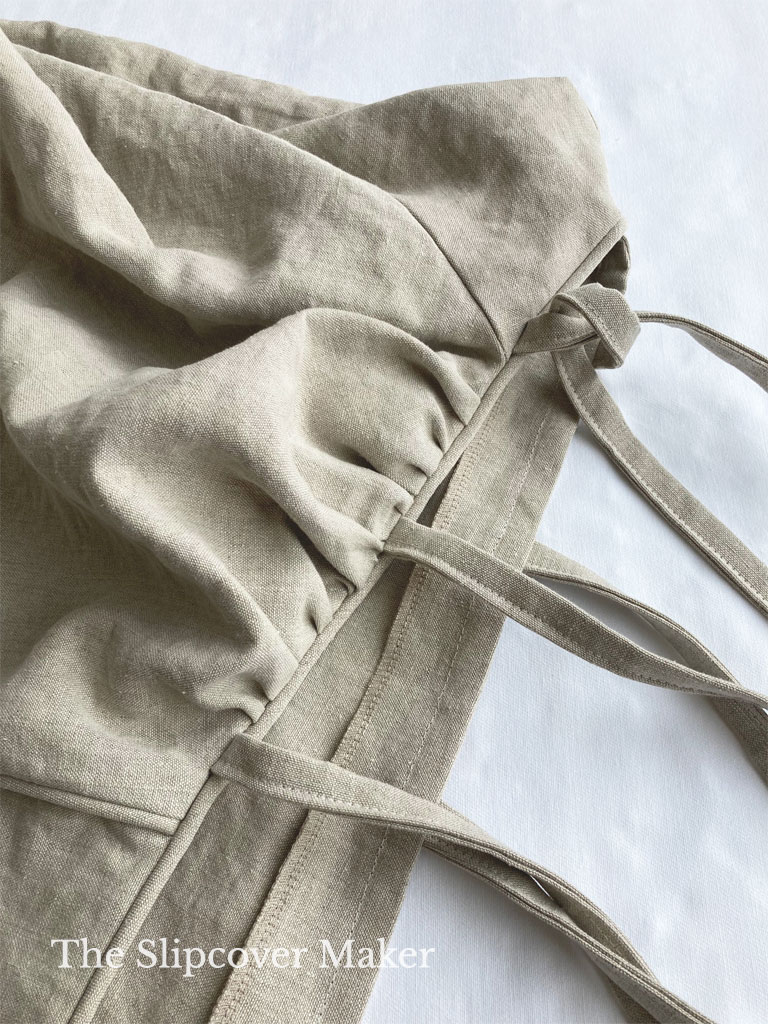
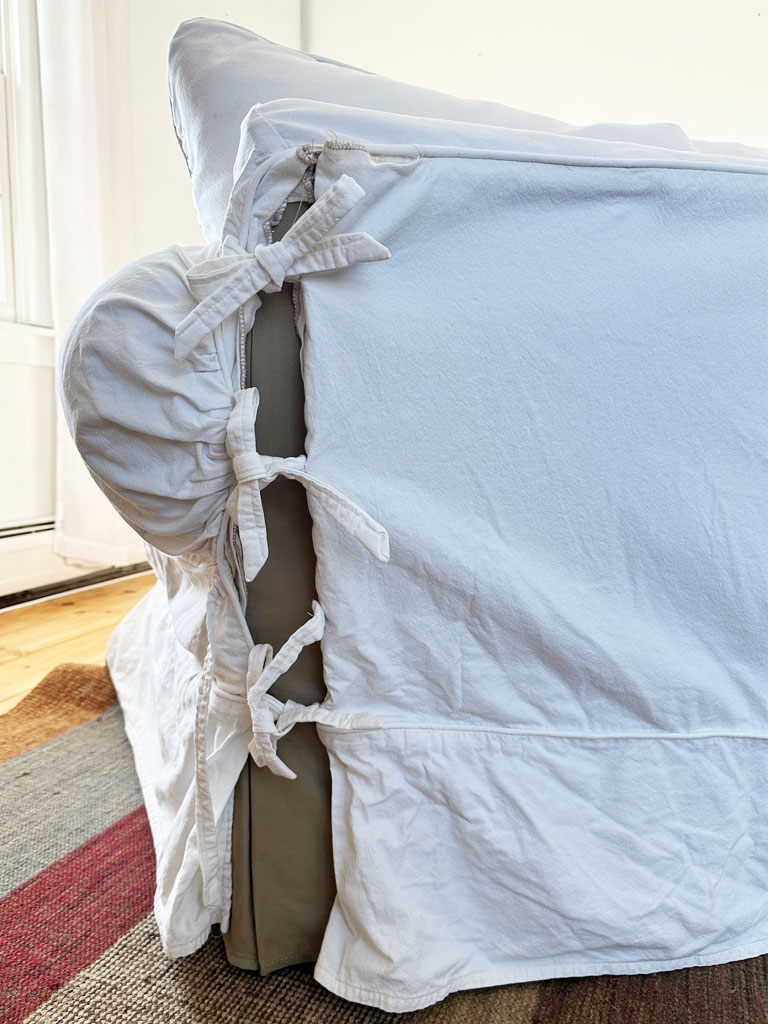
This project was a slipcover copy. I replicated my customer’s soft, medium-weight cotton covers in thick hemp canvas.
The design featured gathers around the front and back arms. They were ordinary gathers, nothing outstanding in quality or placement.
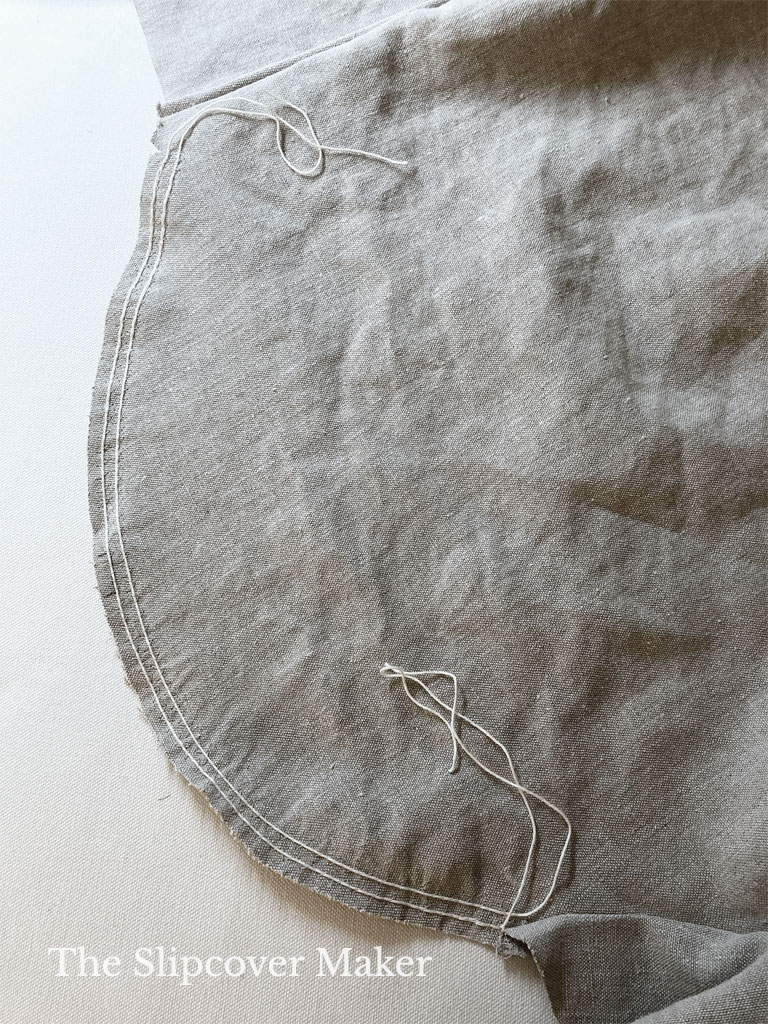
I assumed I could use the standard gathering technique on the new slipcovers: run two rows of machine basting stitches in the seam allowance about a quarter inch apart, knot the thread tails at one end, and then pull the opposite tails to gather the hemp fabric.
It didn’t work! I pulled and pulled the thread tails until my fingers hurt. The thick canvas would not gather.

So, I tried another gathering technique that supposedly works on heavyweight fabrics.
I guided a long strand of kitchen string along the seam allowance as I stitched a row of wide zigzag stitches over it. Think of it as a little zigzag tunnel that contains the string and allows it to move freely. Then, I guided a second strand and stitched another row.
I pulled and pulled on the string tails, and again, the fabric would not gather. The string was too thick and too loosely twisted.
Next, I used dental floss with the zigzag stitch. Based on numerous positive reviews, I thought for sure this was going to work like a charm. No luck. The floss was slick and had too much give. It was not helpful at all in gathering the fabric.
At that point in the project, I was feeling defeated. But I couldn’t give up, I had to deliver two custom-made slipcovers with gathers per the original! Changing out the gathers for little pleats was not an option.
I decided to pull out every single box of threads, yarns, strings, ribbons, embroidery and mending supplies I own to see if I could find something that would work.
Finally, I found a solution! Olympus Sashiko Thread in size 8, also referred to as size Tex 400. I had a skein leftover from an embroidery project. This very strong cotton thread is heavier than machine sewing thread and embroidery floss but not as thick as kitchen string or yarn. It has a matte finish and holds its shape.
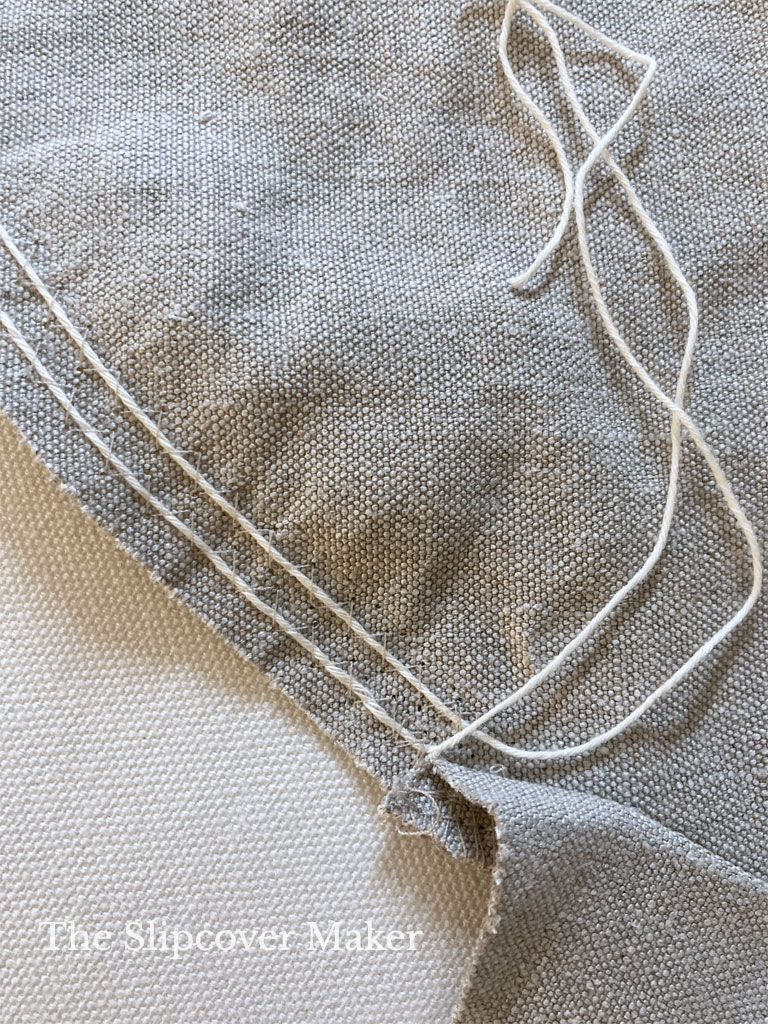
Before I tried it on the slipcovers, I made another set of mock-ups to test the thread using the zigzag tunnel technique.
It worked!! The sashiko thread easily gathered the hemp fabric. I was able to space the puffy folds to lay as natural as possible.
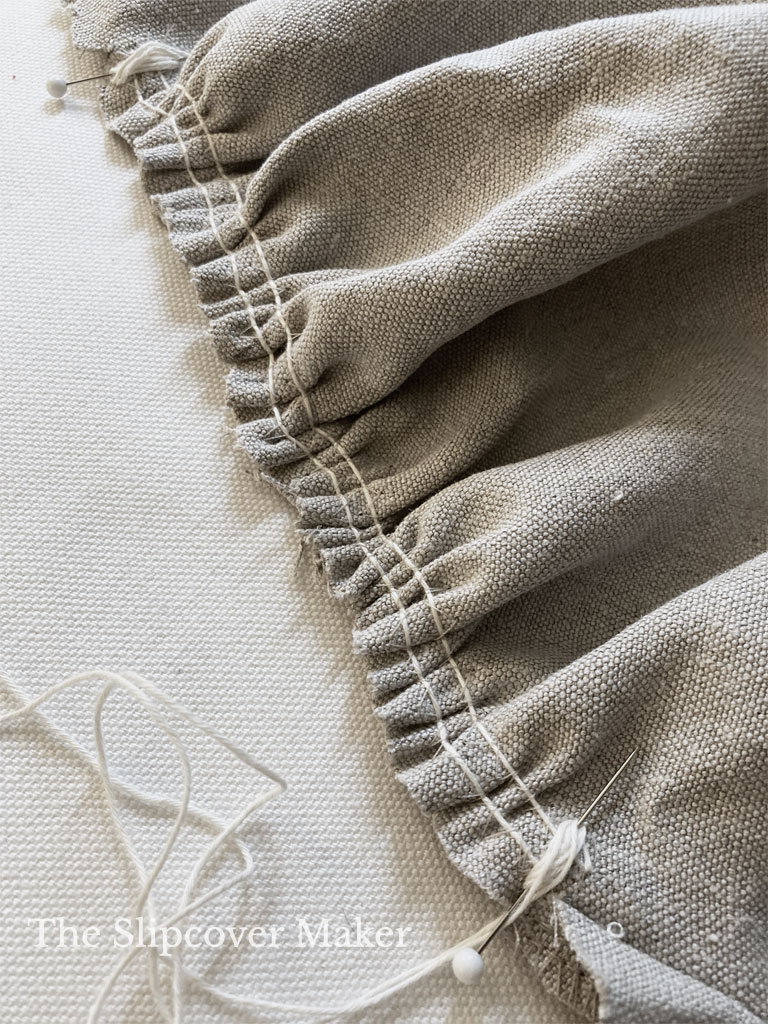
This sewing project reminded me that somtimes it’s necessary to adjust my expectations.
It wasn’t possible to achieve the same small, soft gathers as the original cotton cover. The hemp canvas is a very different fabric. It’s thick and dense; the handfeel is crisp even after the preshrink.
The gathers around the front and back arms will soften overtime with wear and washing. For now, they stand out as a prominent design detail.
I’m pleased with how they turned out.
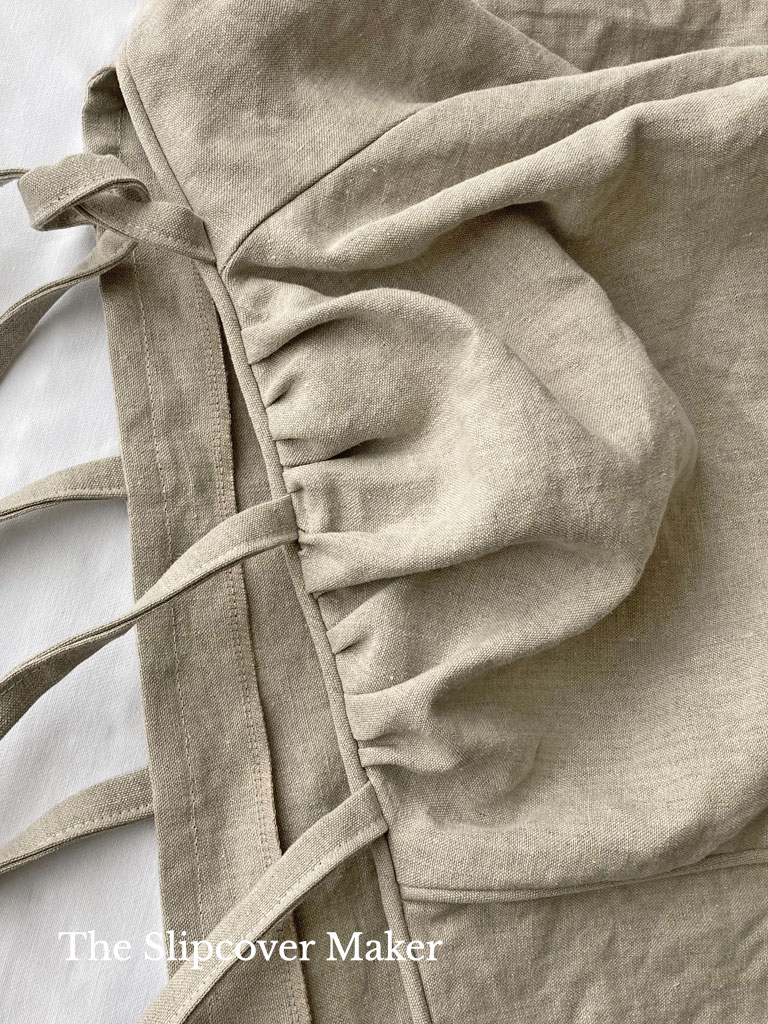
Well done!
Thanks, Ramona!
Looks very nice, thanks for the sewing thread ti!
You’re welcome, Jan!
Karen, a good lesson in think outside the box! Thank you for sharing your experience!
You’re welcome, Lesia! Troubleshooting a slipcover project always teaches something new.
Great lesson on persistence and the look that came from it. Beautiful slipcovers!
Jane, I’m so glad you enjoyed the post. Yes, persistence is key when making slipcovers!
Karen, I received your book on the barrel back slipcover. I love that you actually printed it instead of requiring me to look at an e-book. I need PAPER. I wish you would print a book with all of your tips and educational blogs. I would buy it.
Andrea, I’m with you — I’ll take a paper book over an e-book any day. Thanks for your book wish!
Wow! Well done for working that out and thank you so much for this fabric gathering hack…you are very resourceful indeed!
You’re welcome, Deborah!