
Micro Welt Cord for Slipcovers
I replicate mostly bull denim and cotton duck slipcovers for my customers. Their original covers are almost always trimmed with sturdy welt cord or topstitch.
But one of my recent projects was different. I noticed it was sewn with very narrow piping. It looked tiny compared to the standard 5/32 welt cord I always use. At first glance, I wondered if it was just an empty welt, you know, a folded bias strip without the cording.
As I cut apart the slipcover seams, I was surprised to find micro welt cord! I was so impressed by the look and performance of that little trim.
Seeing that I would be using the same cord size for my customer’s new slipcover, I ordered a roll. I wanted to do a few tests to get the feel of working with it. I made some mock-ups and then trimmed a throw pillow. Here’s what I learned:
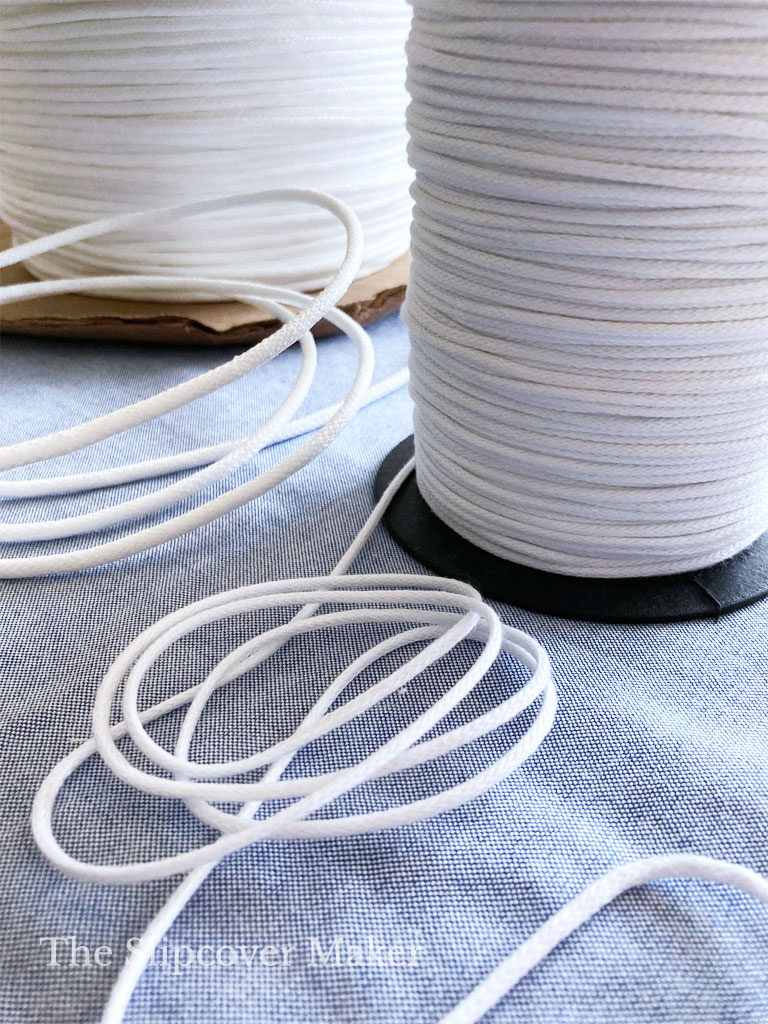
What is Micro Welt Cord?
Micro welt is a pliable, braided cord that is made from a polyester-cotton blend. It’s available in four sizes, each with a diameter smaller than the standard 5/32-inch size commonly used for slipcovers.
This narrow welt cord is primarily used to embellish light to medium-weight valances, draperies, throw pillows, duvet covers, and clothing.
It’s machine washable and does not require preshrinking before using it in your project.
What Size Works Best for Slipcovers?
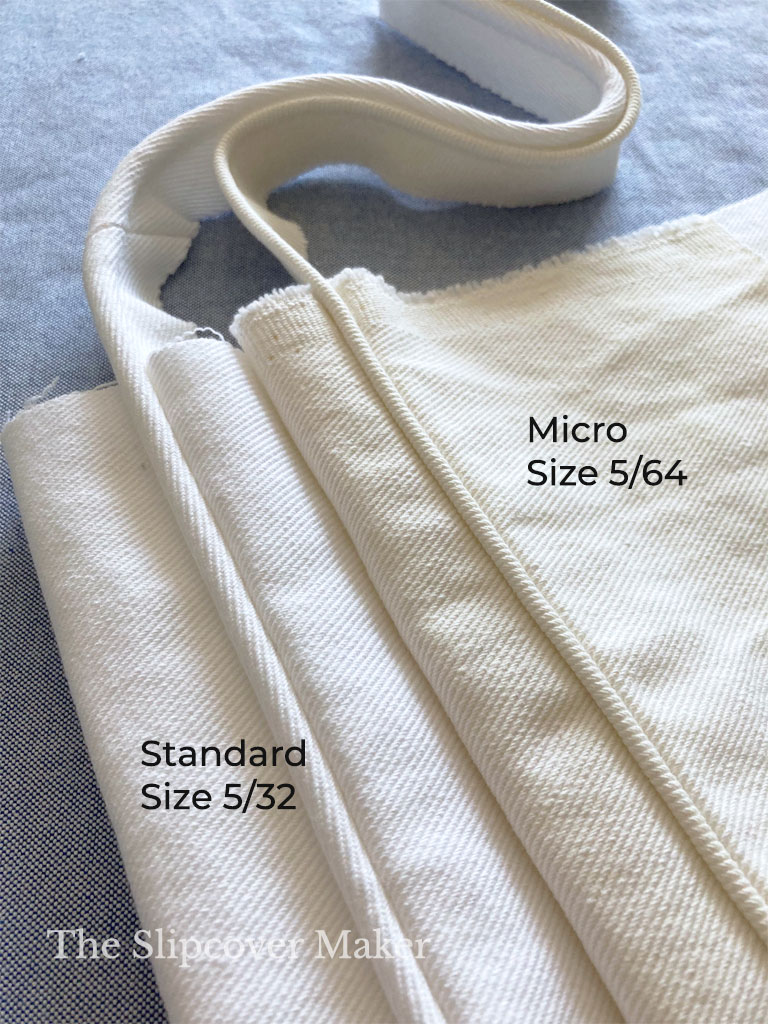
Micro welt sizes are 2/32, 5/64, 3/32, and 4/32. I tested size 5/64, which is the only size I recommend for medium to heavyweight slipcovers. It’s notably smaller than the standard-size cord, but not so small that it will disappear in the welt.
It’s approximately 1/8 inch in diameter, which is two sizes smaller than the standard 5/32-inch cord I ordinarily use. But it still has enough structure to hold its shape in most slipcover designs, but not all fabrics.
Will Micro Welt Work with All Slipcover Fabrics?
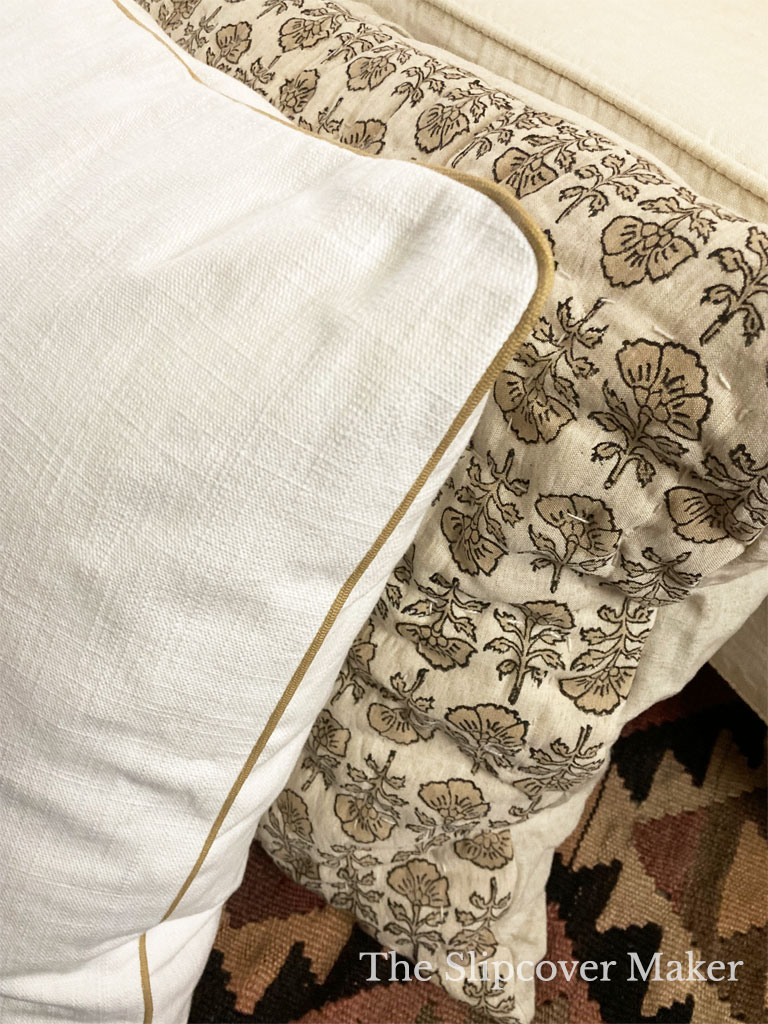
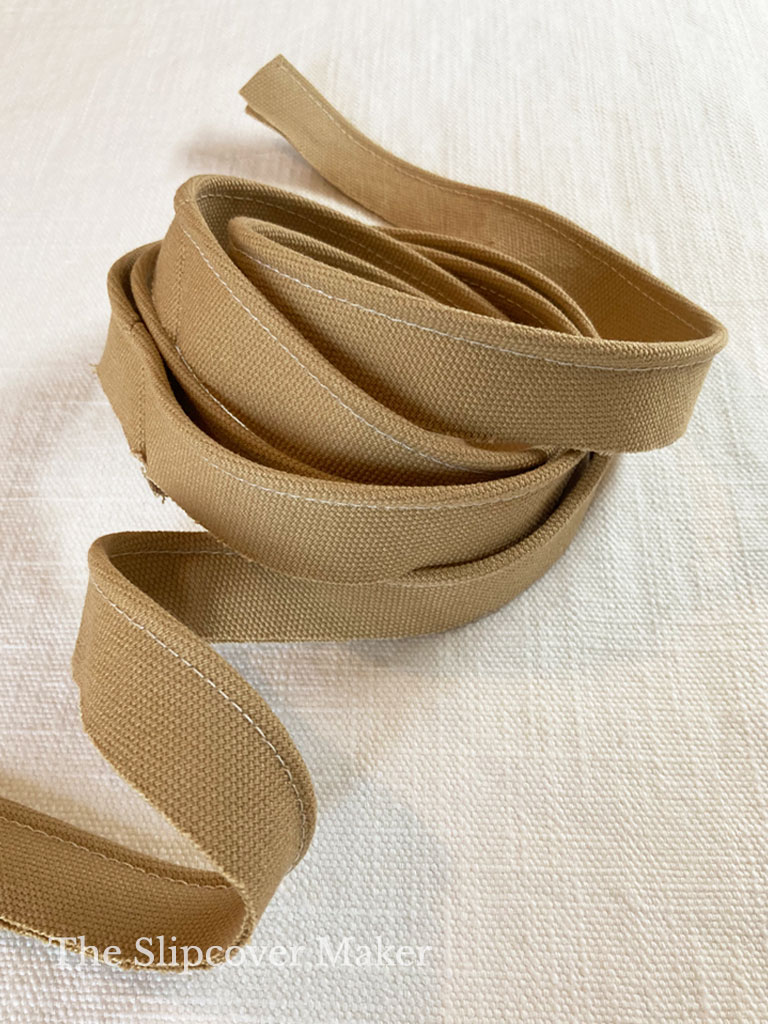
Micro welt cord size 5/64 is not compatible with all slipcover fabrics. It works best with tightly woven, non-stretchy weaves such as twill, canvas, and denim in the weights shown below.
- 8 to 12 oz cotton canvas and duck
- 10 to 12 oz cotton twill and bull denim
- 10 to 12 oz hemp canvas and twill
- 8-to 12 oz linen canvas
Because this micro cord is petite, the shape most likely will disappear if wrapped in plush, quilted or highly textured fabrics. Examples include matelasse, velvet, damask, chenille, and certain synthetic upholstery textiles.
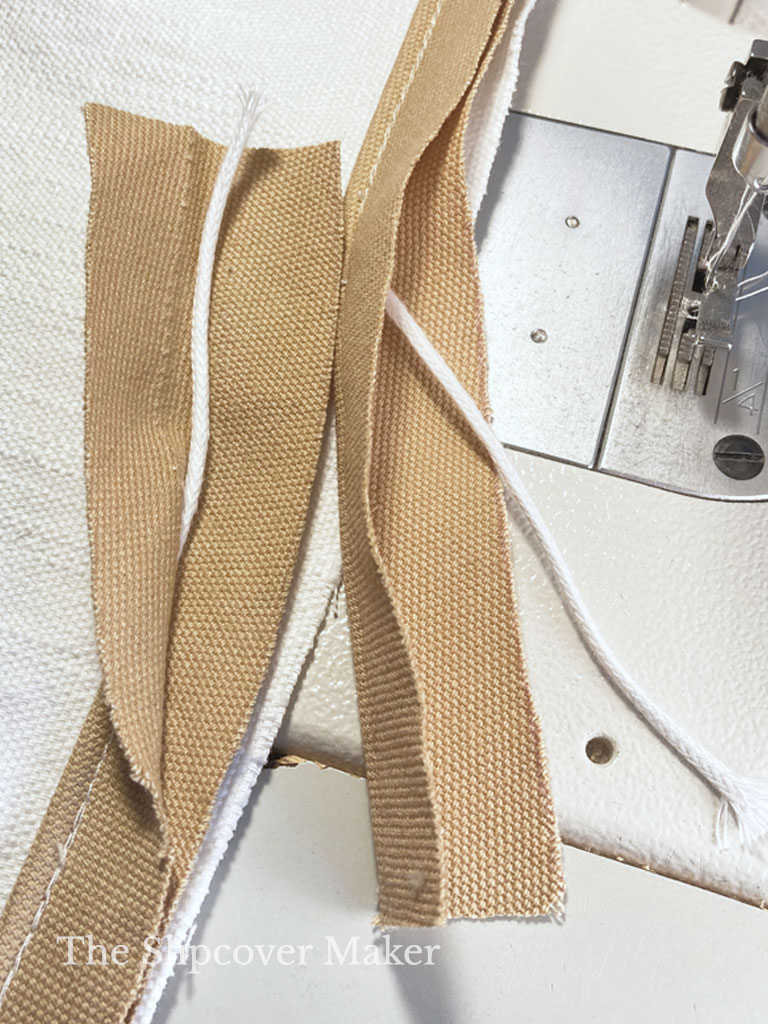
Why Use Micro Welt Cord on Slipcovers?
This little cord works great as an understated alternative to standard welt.
Use it on slipcover projects to create a modern minimal seam finish, especially on simple slipcover shapes such as track arm sofas, basic barrel chairs and boxy dining chairs.
I love the barely-there look when this micro welt is cut from the same fabric and color as the slipcover.
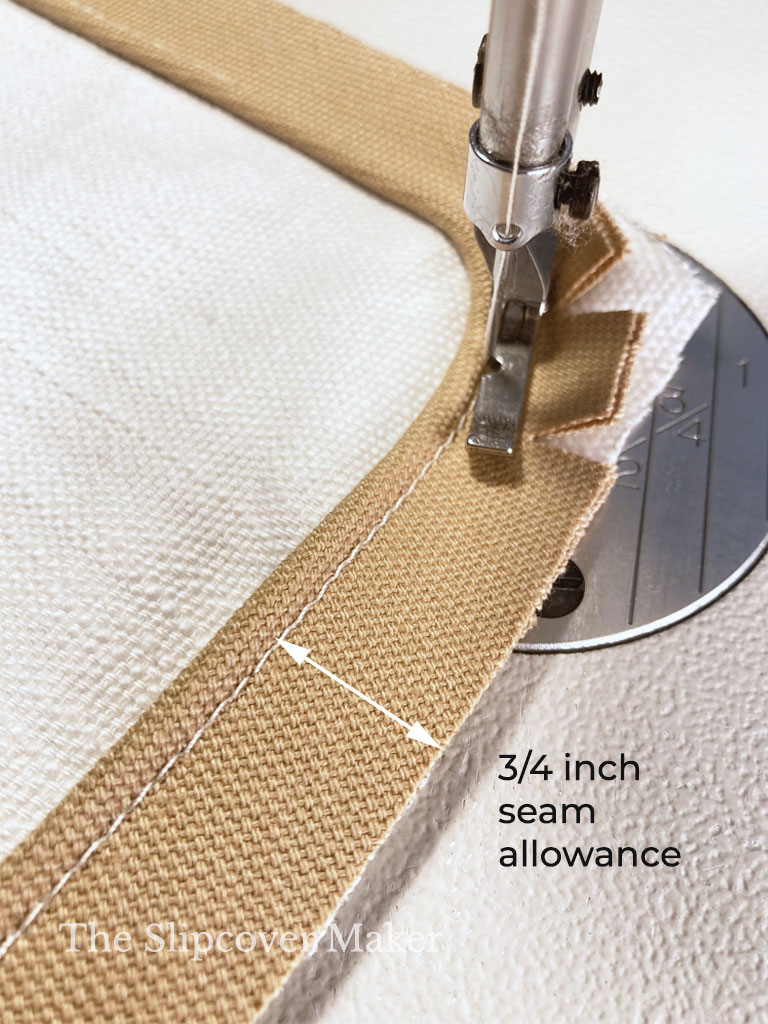
Cut & Sew Tips:
- If you sew your slipcover with 3/4 inch seams, cut the bias welt strips 1.75 inches wide.
- If you sew your slipcover with 1/2 inch seams, cut the bias welt strips 1.5 inches wide.
- Use a zipper foot to sew the welt cord to your slipcover pieces.
- Position the needle snug against the cord without stitching through it. It takes a little practice!
- Or, use a cording foot sized for the 5/64-inch cord.
More Welt Cord Inspiration
7 Welt Cord Alternatives for Slipcovers
The Slipcover Maker’s Guide to Making Welt Cord
Contrast Welt Fabrics for Washable Slipcovers