
Creative Uses for Slipcover Boxing
Boxing is a rectangle panel that connects the top and bottom pieces of a seat cushion and the front and back pieces of an upper cushion. It gives dimension to the cushion cover, framing the shape like a box.
What I love most about boxing is its versatility. A boxing panel isn’t just for cushion covers! It also works great on slipcovers to hide uneven sections, control fullness, and cover exposed wood.
Here are a few of my favorite creative uses for slipcover boxing.
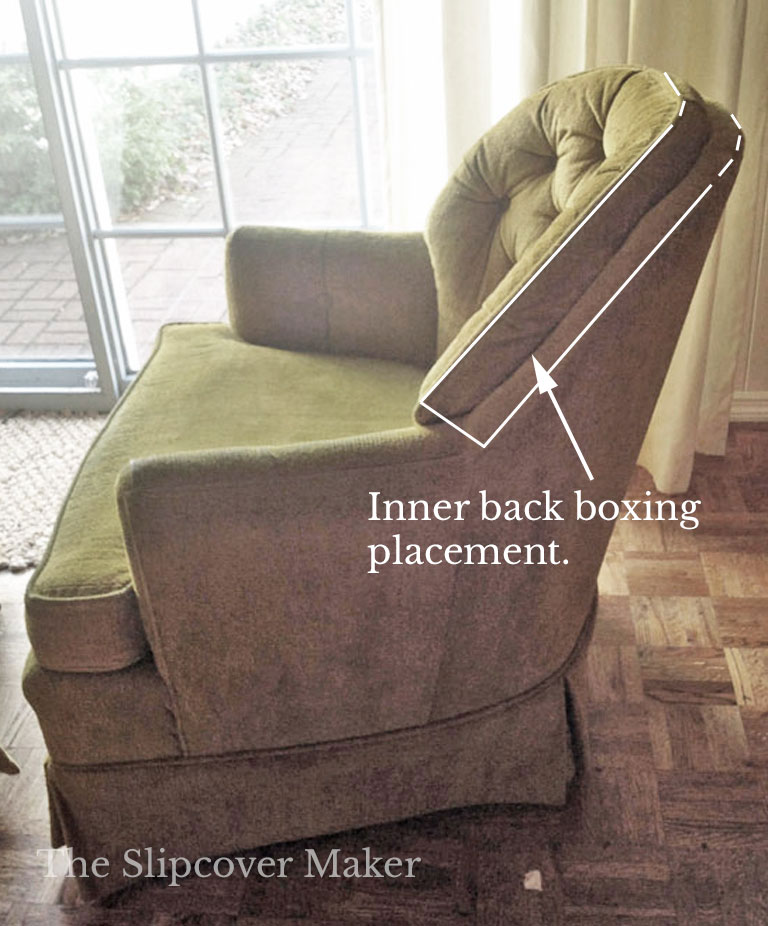
Hide Uneven Sections
This vintage chair is a cutie, but as you can see, the upholstered inner back design is complex. The back cushion is tufted and attached with an accordian pleat construction. If you try to replicate that same design in a slipcover, you will most likely end up with a messy bunch of tucks and gathers!
When I design a slipcover, I look for ways to simplify seam placement and construction. That’s exactly what I did for this hemp canvas cover.
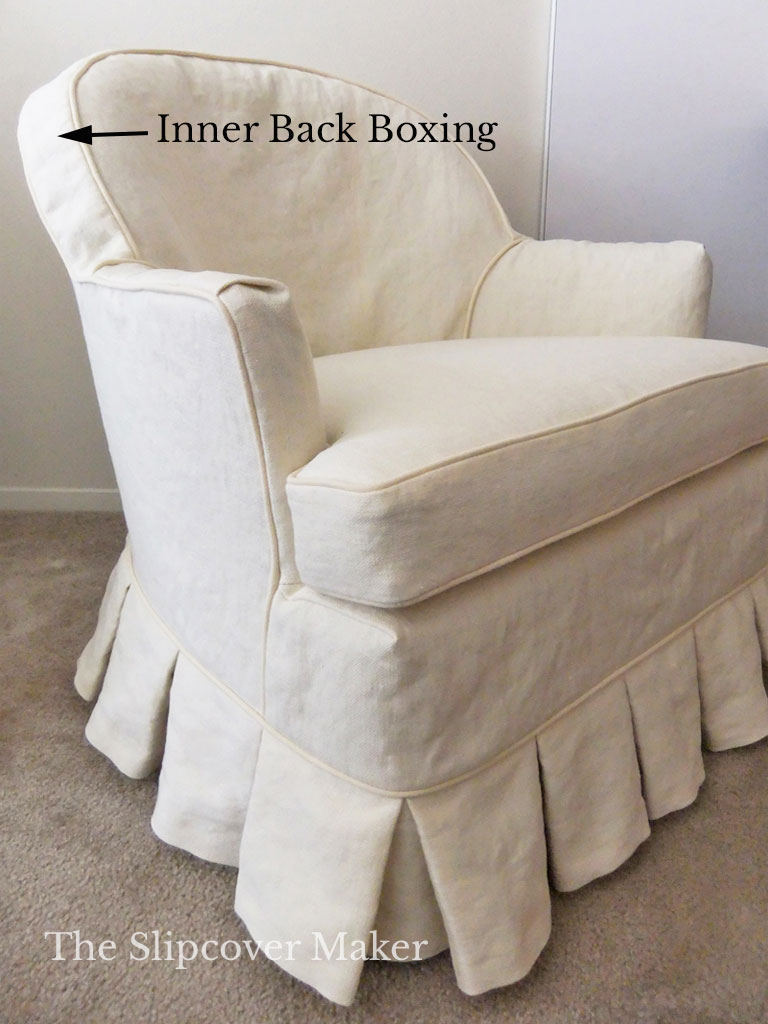
I used a boxing panel to connect the inner back to the outer back. It hid the uneven accordian section and created a simple tailored fit. I love the updated look!
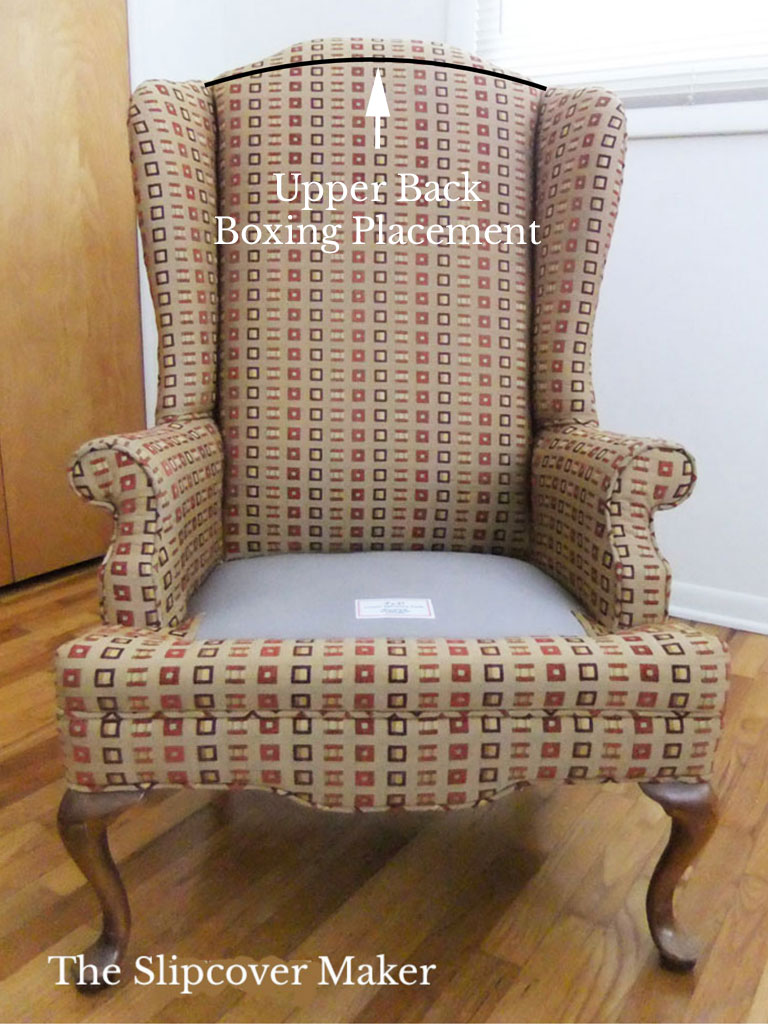
Control Fullness
I often use a boxing panel to control fullness on wingback chair slipcovers especially for styles that have a curvy arched top with a thick, rounded attached back.
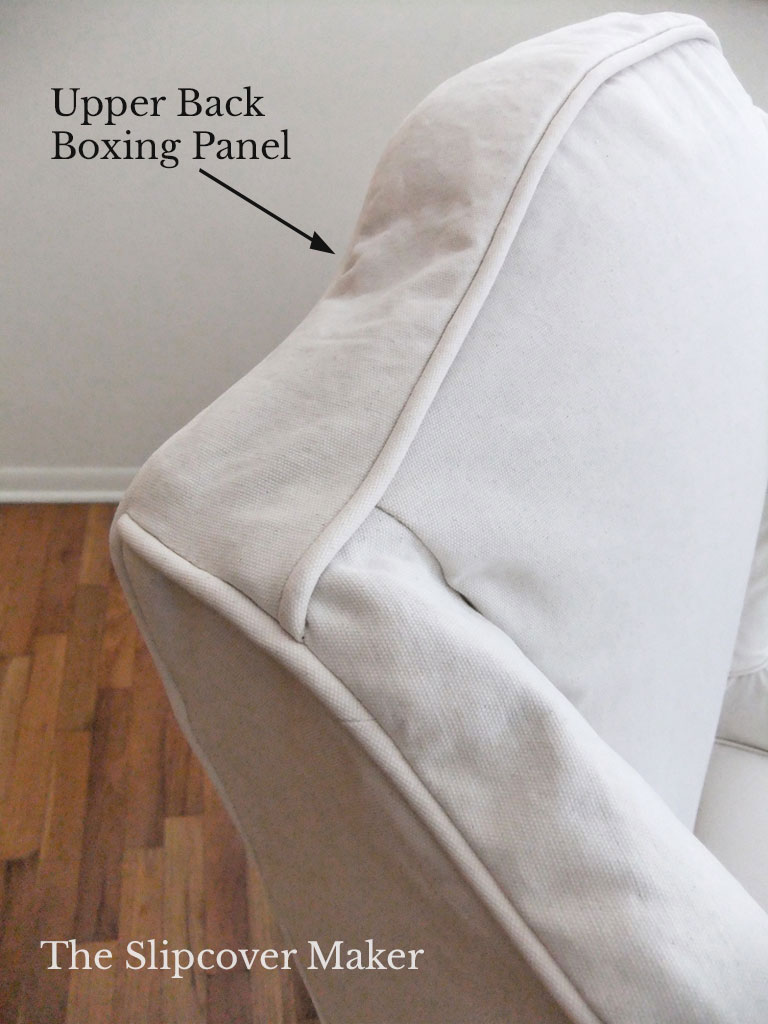
Take a look at the profile of this wingback’s inner back cushion (below). See how it’s fuller and more curved at the top than the bottom? Pin fitting a curve like that usually results in a lot of excess fabric at the very top of the chair.
Instead of using gathers and/or tucks to controll the fullness, I place a 3 inch wide boxing panel across the arched top. The panel’s front seam sits forward on the fullest part of the cushion curve, right before excess fabric accumulates.
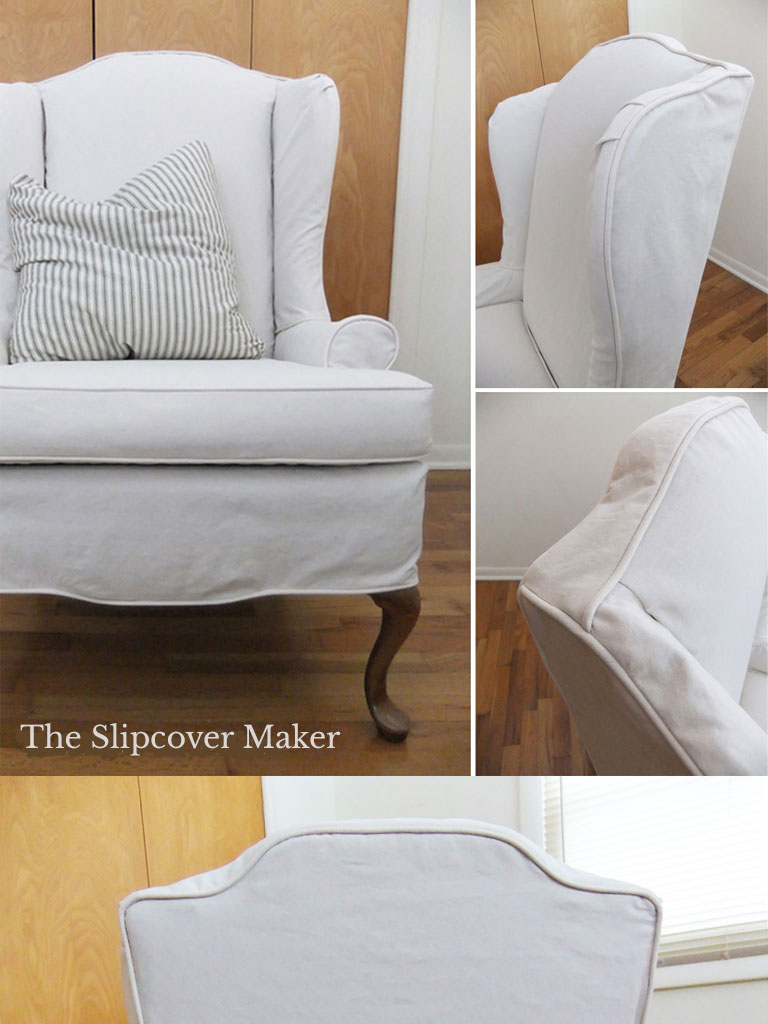
This technique works like a charm when you want to pin a smooth fit across a curved, upper inner back. The boxing panel follows the contour of the curvy arched top and extends to the outer wing seams.
Cover Exposed Wood
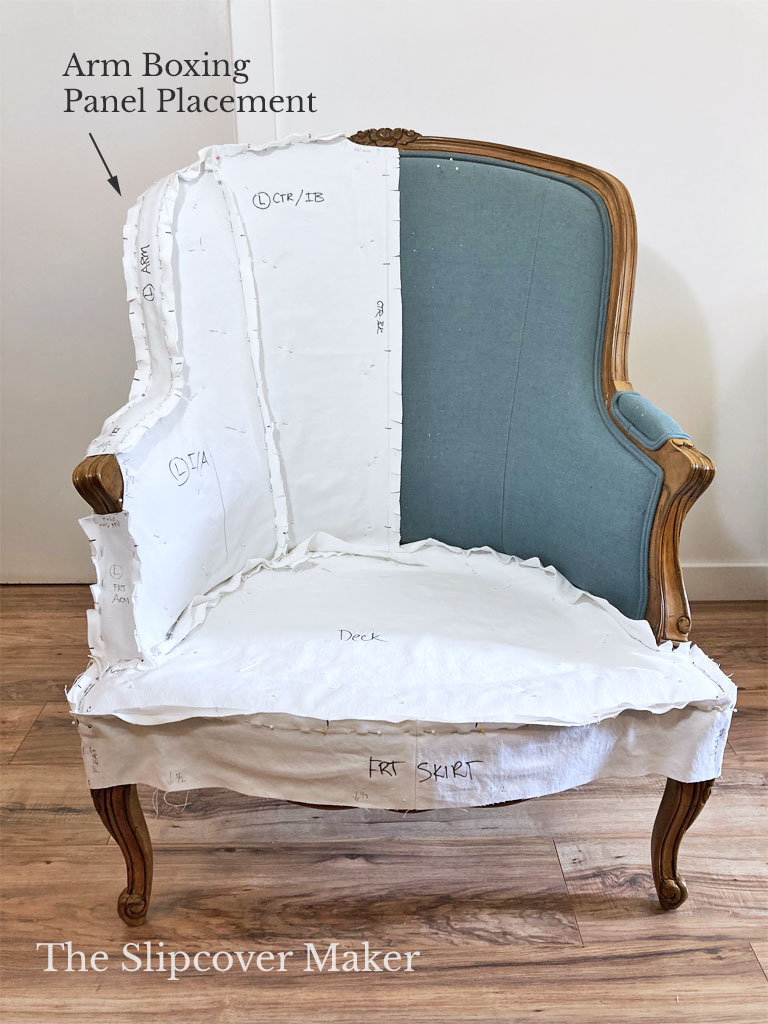
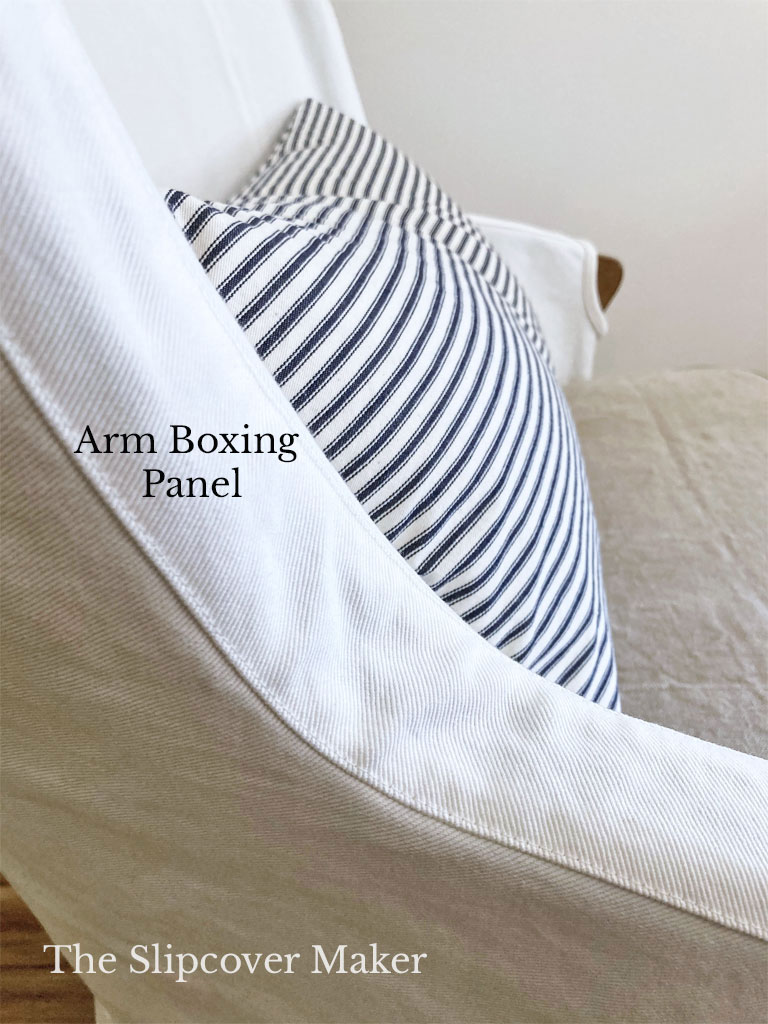
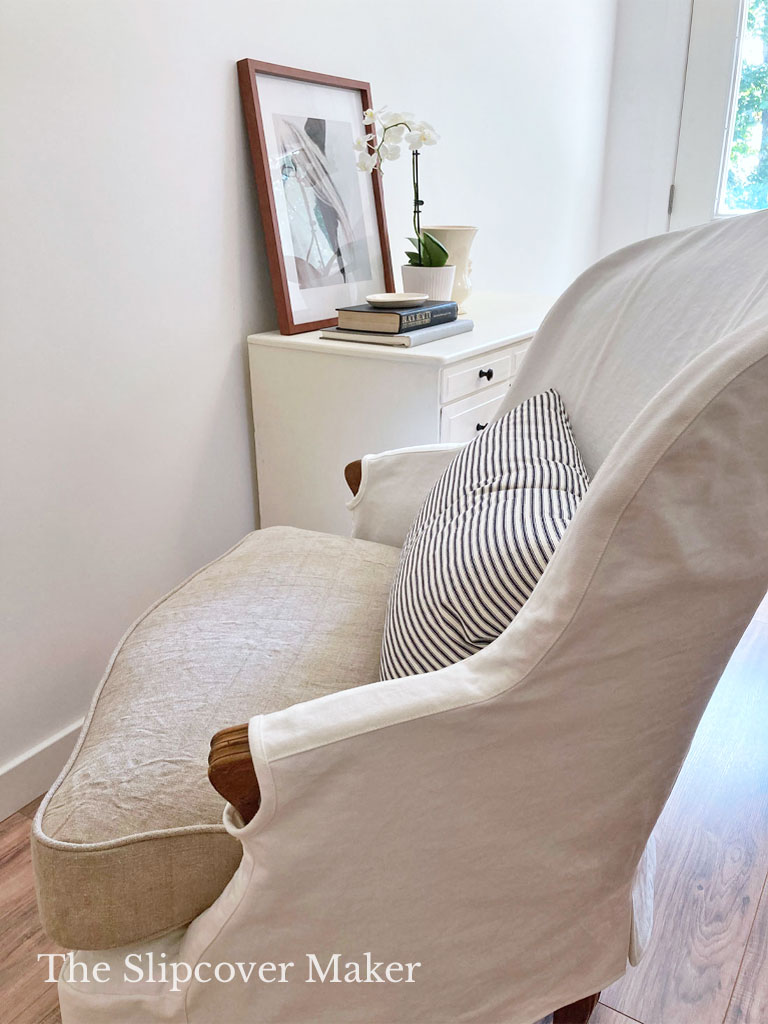
I like using a narrow boxing panel to cover exposed wood arms. The boxing subtly connects the inner arms to outer arms. It looks very pretty on French armchairs.
On certain chairs, it’s fun to leave a bit of the wood exposed, like on the front arm corners or the carved motif at the top of the upper rail. In those areas, I finish the boxing panel ends with a binding or facing.
For this Bergere slipcover project, I edgestitched the arm boxing seams instead of using welt cord. A subtle topstitch on narrow boxing panels creates a lovely, understated look and doesn’t add bulk. A no-topstitch option would also suit a simple design like this.
What are your favorite ways to use boxing in your sewing projects?
Love these ideas! Love the updated look!
Great, Colleen! I hope they will come in handy for future projects.
Thanks so much for the tutorial. Just what I needed before getting to work on my next project. Excellent work!
Wonderful! All the best with your project, Melissa.
Karen, you do beautiful work! I love these boxing ideas. Thank you for sharing your creativity!
Thanks, Nancy! Always happy to share.
Great ideas, thank you!
You’re welcome, Kay!
The chairs look so much better with your slipcovers!
Thanks, Nan!!
Simply Love all of your tutorials! Such beautiful work! Very helpful links on resources.
Laura, thanks so much for your comment! I’m happy my tutorials and resource links are helpful.